
Haven’t you ever wondered how we got here? Biathlon isn’t a new sport. There are drawings going back centuries of humans skiing and hunting at the same time. So when did we decide to make it a sport? How did competitions begin? The IBU? The World Championships? This is my humble effort to tell that story. It’s starts at the beginning of the sport and takes us through the exciting sport of biathlon that we know today:
May, 1861

Birth of Recreational Biathlon
Birth of the Trysil Skytte – og Skiløberforening (Trysil Rifle and Ski Club)! While there is evidence of skiing and shooting going back centuries, and skiing and hunting going back thousands of years, the Trysil Skytte – og Skiløberforening became the first documented biathlon “club.”
January, 1924
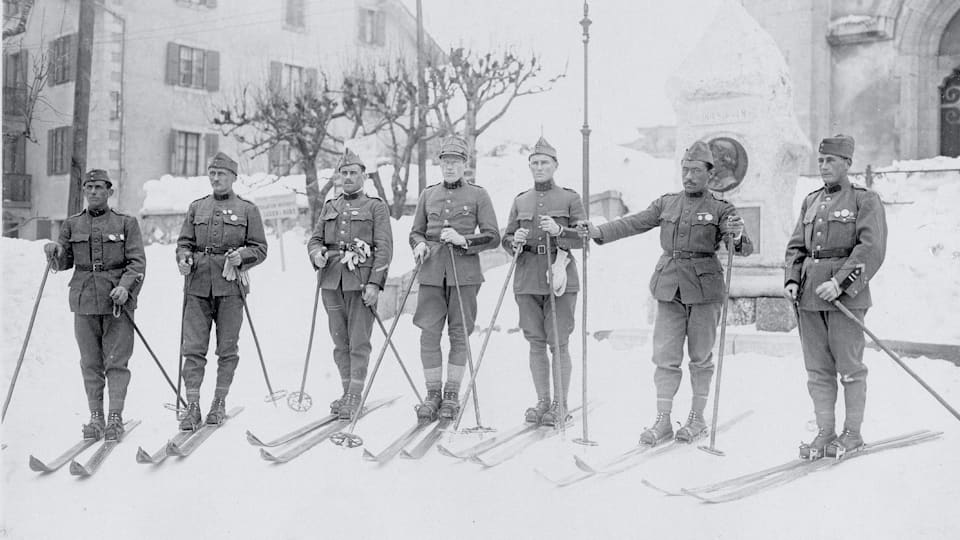
1924 Chamonix Winter Olympics
Military Patrol, the precursor to modern biathlon, was competed at the first modern Winter Olympic Games! That first gold medal was won by the Swiss team followed by the Finns with Silver and the French with bronze. This was actually the only time medals were ever awarded for the Military Patrol competition. While it was competed again in 1928, 1936, and 1948 there were no medals awarded for those competitions. It was subsequently removed from the Winter Olympics competition as it was regarded as too closely related to military conflict and with the world still recovering from World War II they chose to remove the Military Patrol permanently from future Olympic Games.
1953

Union Internationale de Pentathalon Moderne et Biathlon
After being founded in 1948, the Union Internationale de Pentathlon Moderne voted to include biathlon in their growing program. This program helped organize future biathlon competitions (covered below). The sport of biathlon was fostered in this organization until the birth of the IBU in 1993. During the intervening 40 years there were many important milestones as covered below! Today’s IBU is actually still underneath the umbrella of the Uniotn Internationale de Penatathlon Moderne but operates independently. **I couldn’t find the date or meeting notes from the exact date of the vote to include biathlon. If any readers know where this can be found I would love to know!**
March 1-2, 1958
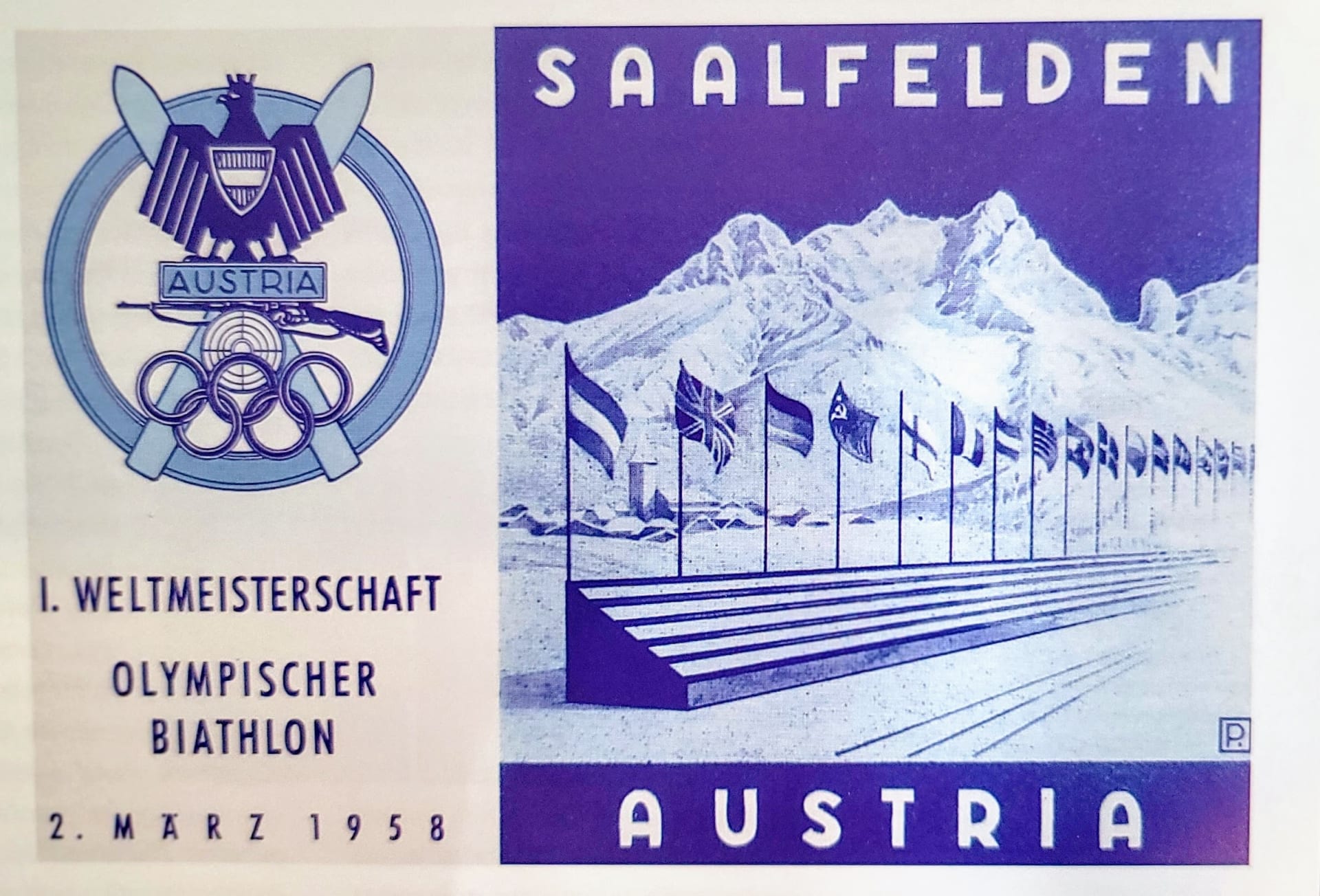
Biathlon World Championships are Born!
Over the weekend of March 1st and 2nd of 1958 the sport that we now recognize as biathlon held the very first World Championship competitions in Saalfelden, Austria. There was exactly one race (and two competitions as the Team competition was based on the top four results of the Individual). Adolf Wiklund of Sweden won the very first Gold medal awarded at a Biathlon World Championships and his Swedish team won the Team competition over the USSR and Norway. Exactly how many men competed in that first race has been a bit lost to time.
In these early days of biathlon the Individual looked a bit different than it does now. It was still competed over 20km and had four shooting stops at regular intervals (it had been random intervals during Military Patrol days of competition) but the shooting stages consisted of four different ranges with shooting distances of 100m, 150m, 200m and 250m each. The competition was also competed with the larger .30-06 Springfield rifle…more on that later. And finally, the penalty for a miss was 2 minutes as opposed to the 1 minute that we see today.
February, 1960

Biathlon Returns to the Winter Olympics in Squaw Valley!
The biathlon events were announced for the 1960 Winter Olympics at the 1955 meeting of the IOC but they needed to first prove that they could hold a major competition. After successful World Championships in 1958 and again in 1959 in Courmayeur, Italy biathlon was ready to return to the grandest stage.
Nine nations sent 30 athletes to compete in Squaw Valley. The inaugural Individual Olympic medalist in biathlon were:
– Gold: Klas Lestander (Sweden)
– Silver: Antti Tyrvainen (Finland)
– Bronze: Aleksandr Privalov (USSR)
February 4-6, 1966

Who’s Up for a Relay?
For the first time since modern biathlon was born we saw a new event added to international competition! At the 1966 Garmisch-Partenkirchen Worlds biathlon officially retired the Team competition and added the Men’s 4×7.5km Relay. The Team competition had simply been the total time of the top four members for a nation. The relay meanwhile, looks almost exactly like a relay you would see today. (Okay fine, they ran a 3×7.5km relay at the 1965 Worlds but it didn’t count.)
The podium of that first men’s podium includes Norway in 1st and Sweden in 3rd. However, surprise contender Poland snuck in and claimed 2nd! While Poland has since secured three more podiums, all 3rd place finishes with the most recent at the 1975 Worlds, that 1966 Silver medal remains their best ever finish.
The other major change made at these World Championships was the shooting distance. After having alternating shooting distances at all prior events (as noted above), the shooting became standardized at 150m for all shooting in both the Individual and the Relay races.
February, 1966

Men’s Junior Worlds!
It might be hard to believe but the first Junior World Championship was held as far back as 1966. Now can you find any results of those Championships? If so you’re a better researcher than me (which isn’t saying a whole heck of a lot). The first records that are easily identified and verifiable in multiple locations are the Junior Worlds (ages 20-22) from 1997 in Forni Avoltri, Italy and for the Youth (<20 years old) from Ridnaun, Italy.
March 2-4, 1973

Lake Placid World Championships
For the first time since 1960, and the first time ever for a World Championships, international biathlon was competed in North America. It’s been 51 seasons since these World Championships and they have only been competed outside of Europe twice since 1973:
– 1987 Men’s Worlds in Lake Placid, USA
– 1994 Worlds in Canmore, Canada (only for Team Event which were not included at the Lillehammer Olympics)
If you count Khanty-Mansiysk in Russia, which is geographically in Asia then that would add four more times being held outside of Europe.
February 27 – March 1, 1974

I Feel the Need, the Need for a Sprint
The 1974 Minsk World Championships was the site of the first Sprint competition. The Sprint of 1974 looks almost exactly like the Sprint race of today with 10km of racing and two shootings at the then standard 150m range. For each miss there was a 150m penalty loop which of course is the same as today. The first Sprint gold medal was won by Finnish biathlete Juhani Suutarinen.
The Sprint was not added to the Olympic Games for the 1976 Inssbruck Olympic Games but instead was introduced in 1980 in Lake Placid.
In the picture above Martin Fourcade hoists his 7th Sprint discipline globe. He would go one to win an 8th Sprint globe in 2019-2020. He is second behind only Ole Einar Bjoerndalen’s 9 for most Sprint globes.
March 2-5, 1978


Say Hello to My .22
The late 1970’s were a time for major changes to the shooting aspect of biathlon. There were two major changes introduced in 1978 at the Hochfilzen World Championships. First, the rifle was changed from the old .30-06 large caliber rifles to the .22 caliber that is still used today. Also in Hochfilzen the biathlon range was reduced in length once again from 150m, used since the introduction of the relay in 1966, to a new standard 50m range that we all recognize today.
1977-1978 Biathlon Season
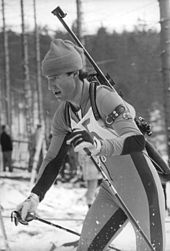
World Cup Circuit (take 1)
There seems to be some debate about what was the first season of the World Cup. Per the IBU official website the first “official” season of the World Cup was 1983-1984 season. However, the first full season of biathlon races organized by the Union Internationale de Pentathalon Moderne et Biathlon was for the 1977-1978 season. That season included five weekends of racing including some familiar stops at Ruhpolding, Antholz-Anterselva, Hochfilzen (World Championships noted above), as well as Murmansk and Sodankyla.
At the end of the season East German Frank Ullrich took home the inaugural Overall crown after winning three of the ten races.
1) Frank Ullrich
2) Klaus Seiberg
3) Eberhard Rösch
The East Germans swept the top three overall places with Klaus Seibert and Eberhard Rösch finishing seven and 11 points back respectively. Frank Ullrich went on to win four of the first five Overall crowns with Klaus Sierbert winning the Overall in the 1978-1979 season.
February 16-22, 1980

Lake Placid Winter Olympics
The shooting at the 1980 Olympics is the first “modern” shooting in international biathlon. At these Olympic games the clap-and-fall target was introduced and the old paper targets went away for good. From this point on to the basic shooting is the same. The only changes from 1980 to the present are in athlete technique and speed but not to the shooting range set up.
Also in Lake Placid the Sprint comes to the Olympics for the first time and the first gold medal was taken home by East German Frank Ullrich. The USSR and East Germans swept the medals except for the bronze in the relay which was taken by the West German squad.
February 29 – March 4, 1984

Chamonix World Championships
While the men competed at the 1984 Winter Olympics in Sarajevo the women, who were not accepted into the Olympic Games yet, competed in the very first Women’s Biathlon World Championships in Chamonix.
The distances for the first five seasons of women’s competitions were shorter than the current distances:
– Women’s Individual was 10km (with three shooting stages)
– Women’s Sprint was 5km
– Women’s relay was 3x5km
The United States women won bronze in the debut relay behind the USSR and Norway. It is one of just four podium finishes for the US Women’s relay team on the World Cup level and the only relay podium at the World Championships.
Pictured above is US biathlete Kari Swenson who has one of the most tragic stories in the history of the biathlon family. (See the stories of biathlon timeline for more on this). At the 1984 World Championships she finished 5th in the Individual and 12th in the Sprint. she also helped the US women’s team to bronze in the debut relay.
1983-1984 Biathlon Season

World Cup Circuit (take 2)
In January of 1984 (the season didn’t begin until after the New Year) the first events of the first “Official” Men’s World Cup season (per the IBU) kicked off with an Individual and a Sprint race in Falun, Sweden. The first World Cup podium was in the Individual and was as follows:
1) Odd Lirhus (Norway)
2) Yvon Mougel (France)
3) Tapio Piiponen (Finland)
The season followed this pattern (IND and SPR) for each of the remaining events in Pontresina, Ruhpolding, Sarajevo (Olympics), Oberhof, and ending in Oslo-Holmenkollen.
Relays were held as well but the results are not readily accessible except for the World Championships. Some of the relay results that you can find seem to be suspect listing some teams with as many as 25 penalty loops which seems…improbable.
At the end of the season the final top 3 in the Overall were:
1) Frank-Peter Roetsch (East Germany – pictured above)
2) Peter Angerer (West Germany)
3) Eirik Kvalfoss (Norway)
This was the first of Roetsch’s three Overall victories.
1983-1984 Biathlon Season
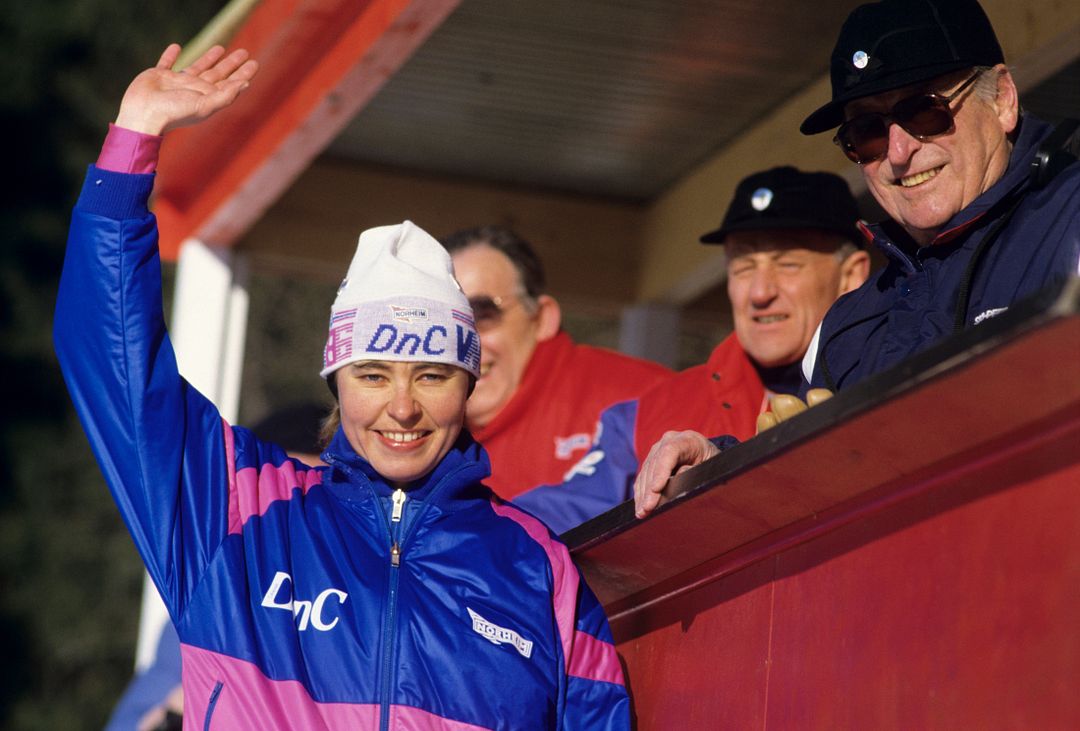
Women’s European Cup
Once again there is a difference of opinion regarding the start of the Women’s World Cup. The first circuit of organized races for women by the Union Internationale de Pentathalon Moderne et Biathlon was in the 1983-1984 season. While it was called the “European Cup” it was open to all competitors and wasn’t really all that different from what became the World Cup. However, it is not recognized as the World Cup so per the IBU the inaugural season was the 1987-1988 season which will be discussed below. After the World Cup started in 1987-1988 the European Cup continued and became what we know today as the IBU Cup. However, from 1983-1984 through 1987-1988 this was the top level of international biathlon for women.
The 1983-1984 women’s season saw a shorter schedule than the men with races taking place in Falun and Ruhpolding alongside the men, a World Championships in Chamonix (because they were not competing at the Sarajevo Olympics), and concluding with races in Lygna as opposed to Oslo-Holmenkollen.
Mette Mested won just a single race and had three total podiums, but she squeaked out the win in the Overall. The final Overall standings were as follows:
1) Mette Mested (Norway)
2) Sanna Grønlid (Norway – Pictured above)
3) Gry Østvik (Norway)
1987-1988 Biathlon Season

Women’s World Cup
Per the IBU the first “official” Women’s World Cup season took place during the 1987-1988 season. The women raced the same venues as the men for each weekend except the Olympics where the women still were not able to compete yet. This included racing in Hochfilzen, Antholz, Ruhpolding, the Chamonix World Championships, Oslo-Holmenkollen, and Keuruu/Jyväskylä.
The top three in the Overall standings at the end of the first Official World Cup season for the women:
1) Anne Elvebakk (Norway – pictured above)
2) Elin Kristiansen (Norway)
3) Nadezhda Aleksieva (Bulgaria)
Norwegian women won four of the first six Overall titles with only Swede Eva Korpela winning two titles in 85/86 and 86/87. There wouldn’t be another Norwegian women to win the Overall until Liv Grete Poirée in the 2003-2004 season, a span of 15 seasons.
1988-1989 Biathlon Season

Women Races Lengthened
The 1988-1989 biathlon season was another major step towards the biathlon that we know today. With the beginning of this season the solo women’s races (that existed at that time) were lengthened to the distances that we know today:
– Women’s Individual lengthened from 10km to 15km and 4th shooting stage added
– Women’s Sprint from 5km to 7.5km
The women’s relay meanwhile was lengthened to three legs at 7.5km. The relay would go to four legs in the 1992-1993 sason. Finally it would settle on the 4x6km relay race in 2002-2003.
Pictured above is Czech biathlete Jiřina Adamíčková – Pelcová who won the 1989-1990 Overall title, the third of the “official” Women’s World Cup titles and the second at the newly lengthened distances.
1988-1989 Biathlon Season

European Cup
With the start of the 1988-1989 biathlon season a second level to biathlon started. The European Cup eventually turned into the IBU Cup that we know today. It’s difficult to know now what was happening in these early European/IBU Cup races. The results are scarce and don’t become more consistently available until nearly a decade later.
February 7-12, 1989

Joint World Championships
The 1989 Biathlon World Championships hosted in Feistritz, Austria were the first time that both the Men’s and Women’s Biathlon World Championships were hosted at the same time and in the same place. The first joint Worlds was the one and only Worlds hosted in Feistritz.
Six nations won medals at these first joint Worlds including:
– USSR: 7
– Norway: 7
– West Germany: 4
– East Germany: 3
– Bulgaria: 2
– Czechoslovakia: 1
Pictured above is Erik Kvalfoss (picture not from 1989 Worlds) who won Gold in the Individual and Silver in the Sprint and Bronze in the Relay was the most decorated athlete at those World Championships.
February 11-20, 1992

Women Join the Olympics!
Finally, in at the 1992 Albertville Winter Olympic Games women were included in the Olympic competitions. It was 32 years and seven Games since men’s biathlon returned to the Olympics in Squaw Valley. It was also eight years since the first Women’s World Championships was held and they had been skipped over for the 1988 Calgary Olympics. Ever since 1992 though the women have competed alongside the men.
The first women’s competition of the 1992 Games was the Sprint won by Anfisa Restzova for the Unified Team of former Soviet Republics. She was joined on the podium by Antje Misersky-Harvey from Germany with Silver and Elena Belova also from the Unified Team. Years later it was admitted that the Unified Team was using blood doping at those Olympics. However, Antje Misersky-Harvey, formerly of the East German team, received the Heidi-Krieger Medal in 1995 for her refusal to take part in the blood doping of the earlier East German team.
Anfisa Restzova is one of the interesting and sad stories of biathlon. Just looking at her successes you would think she would be one of the great stories. She is the one of just two athletes to have won medals in both cross country skiing and biathlon. (Denise Hermann-Wick being the other!) She also won medals at three consecutive Olympics under the flag of the USSR (1988), the Unified team (1992), and the Russian Federation (1994). However, in 2020 she admitted to doping in her career as well which of course helped her to those amazing feats. Anfisa Restzova said some very gross things about Norwegian athletes at that time as well, comparing them to cockroaches. She died in October of 2023 due to complications from a heart attack. She is also the mother of biathlete Kristina Restzova who prior to the Russian invasion of Ukraine was starting to have some good success on the World Cup as well. Her other daughter, Daria Virolaynen, was also a Russian biathlete but has left Russia and will be competing for Finland now.
March 18, 1993

Ole Einar Bjoerndalen Debut
The first of the Great Three of men’s biathlon, Ole Einar Bjoendalen made his World Cup debut in Kontiolahti in the Individual. The 19 year old finished a respectable 29th. He followed that up with a 92nd in the Sprint two days later.
In his career he only one time finished worse than that 92nd, a 95th in the season opening Individual in Hochfilzen in the 2000-2001 season during which he had an absolutely ridiculous 12 misses.
OEB only finished outside the top 60 six times in his career including his 2nd career race which was also his worst Sprint finish by FAR. Besides his early race, he finished 66th in the 2017-2018 Sprint in Olso-Holmenkollen, his 475th career race and the third last race of his career.
Also noteworthy in the 1992-1993 season, Sven Fischer, another of the best men’s biathletes of all time, made his debut and also scored his first career victory. In what race was his first career victory? The Sprint in Kontiolahti, Bjoerndalen’s 2nd career race where he finished 92nd.
July 2, 1993
International Biathlon Union
After being under the umbrella of the Union Internationale de Penathlon Moderne since 1953 it was time for biathlon to have a new home. As a result the International Biathlon Union was formally founded on July 2, 1993 in London, UK. While it’s been far from perfect the IBU has been the home of the biathlon family ever since.
December 8, 1994

Magdalena Forsberg Arrives
Did anybody know that was the first race of the greatest women’s biathlete of all time? Her very first race was Individual in Bad Gastein where she finished 13th. It wasn’t just that she had a good first race, she just continued right on with good finishes for the rest of her career. The numbers that she put up were amazing but we’ll save some of those for later.
Here’s one of my favorites though…Forsberg ran 153 solo races. She finished outside the top 30 twice…and one of those was a 31st. Sure it was a different era and the talent level wasn’t near where it is now, but that’s an unreal statistic.
January 28, 1995

Magdalena Forsberg Wins!
It took her just six races to get ready for her first win. Then in race #7 she climbed to the top of the podium for the first of what would be 42 times in her career. This particular race was a Sprint in Ruhpolding that she won by 5.0 seconds.
January 11, 1996

Ole Einar Bjoerndalen’s 1st Victory
Ole Einar Bjoerndalen used perfect 20/20 shooting to rise to the first victory of his World Cup career in the Individual race at Antholz. It was his 31st career race. That’s pretty good, but somebody we’ll mention in a little bit did it much faster.
1996-1997 Biathlon Season

The Hunt
With biathlon continuing to grow in popularity it was time to add another event to the sport! The beginning of the 1996-1997 season saw the addition of the Pursuit (AKA the Hunt) to the race calendar. The first Pursuit races took place the very first week of the season on December 1st, 1996 in Lillehammer, Norway.
The first women’s Pursuit saw Simone Greiner-Petter-Memm move from 2nd to 1st to claim victory. The winner of the Sprint, Petra Behle, off the podium and finished in 5th after seven missed shots.
For the men Sven Fischer started the Pursuit with a 5.8 second lead after winning the Sprint, and crossed the finish line just 2.6 seconds ahead of Pavel Rostovtsev who moved up from 3rd.
At the end of the season the first discipline globes were won by:
– Women: Magdalena Forsberg (Sweden)
– Men: Viktor Maigourov (Russia)
This would be Forsberg’s first crystal globe of any time. She would go on to win the Overall Globe that season, her first of six consecutive Overall globes to go along with 16 discipline globe including five Pursuit globes. Forsberg’s five Pursuit globes, along with her five Sprint globes, are still the most globes in a single discipline of any woman in biathlon history.
1998-1999 Biathlon Season

© Mazoni/IBU
The Race of Kings
It’s hard to believe but it took until the 1998-1999 biathlon season for the Mass Start to be added to the schedule. It seems hard to believe. Is there anything more exciting than seeing 30 biathletes line up at the start and the first one to the finish wins? The tactics on the course and the tense shootings on the range are unbeatable in a Mass Start.
The first Men’s Mass Start was won by Raphael Poiree (France) and the first Women’s Mass Start was won by Uschi Disl (Germany).
The first Women’s Mass Start discipline globe was won by Ukrainian Olena Zubrilova. That season Zubrilova also won the Pursuit globe so she really loved going head to head with her fellow competitors. She ended the season 2nd in the Overall which was her first of three straight years in the top three of the Overall.
The Men’s Mass Start discipline globe went to Sven Fischer as he went on to win his 2nd career Overall Globe.
March 24, 2002

The Great Woman, Magdalena Forsberg, Retires
Magdalena Forsberg finished 8th in the Mass Start in Oslo-Holmenkollen as she raced on the World Cup for the final time. It was the end of a truly glorious career. Over eight seasons she accomplished the following:
– 153 solo races
– 42 wins
– 87 podiums
– 6 Overall Globes (in 8 seasons!)
– 16 Discipline Globes
– 2 Olympic medals and 12 World Championship medals
– 96.7% top 20 rate
– 56.9% podium rate is the 3rd best of all time and the best of any athlete who started their career after 1978.
Other important notes:
– She has 6 Overall Globes. No other woman has more than 5 career finishes in the top 3 of the Overall
– She has 16 Discipline globes. The 2nd most is Magdalena Neuner with 7.
March 20, 2005

Mix it Up!
The final race of the 2004-2005 season was the first race of it’s kind…the Mixed Relay. The Russian teams went 1-2 in that first Mixed Relay race. The Mixed Relay was kept only in the World Championships until the 2007-2008 season when it began to be added occasionally to the regular calendar. Now it is a regular event occurring at least three times per year and was added to the Olympic schedule in 2014.
From the first Mixed Relay in 2005 through 2017 the relay always was run by the women in legs 1-2 and men in legs 3-4. However, since the start of the 2018-2019 season that order can be either men first or women first. Also, prior to the 2019-2020 season the women always ran 6km and the men 7.5km. Since then though, the race is either all 6km or all 7.5km.
March 13, 2008

Martin Fourcade Arrives
As Ole Einar Bjoerndalen was closing in on his, at the time, record 5th of what would become six Overall Crystal Globes, a 20 year old Frenchman was just starting his World Cup career. While he was certainly regarded as a talented biathlete, nothing in that debut race where he finished 61st indicated that he was one day going to break OEB’s Overall record with seven Overall Globes. That Sprint in Oslo-Holenkollen was actually won by another man who would go on to win the Overall in two yeras, Emil Hegle Svendsen!
March 14, 2010

Martin Fourcade’s First Victory
While Fourcade’s first race didn’t indicate he was going to be a star, by the time he got to 37th race of his career it seemed like it was just a matter of when that first victory was going to come. By this point he already had won a Silver medal in the Mass Start at the Vancouver Winter Olympics.
He started out the week in Kontiolahti finishing 3rd in the Sprint, just over30 seconds back of race winner Ivan Tcherezov. The next day he was on fire. He had a miss in his first prone shooting, and was absolutely perfect after that. He ended up winning with ease by 10 seconds.
Once he got that first victory he really seemed to like it. Actually if you get a chance go watch the end of the race on youtube. He absolutely launches his poles into the air as he crosses the line. The next weekend in Oslo-Holmenkollen he went back to back winning the Sprint and the Pursuit. He was on his way!
By the end of his career he had amassed a full 83 victories which at the time was 2nd behind only Ole Einar Bjoerndalen. During the 2023-2024 biathlon season JT Boe surpassed that mark. However, as of today Fourcade’s seven Overall Globes remains the standard along with:
– 26 discipline Globes (Also a record)
– 150 podiums
– 7 Olympic Medals
– 28 World Championship medals
February 28, 2013

JT Boe, the 3rd Great Man of Biathlon, Makes His Debut
On a relatively warm February afternoon, a 19-year old Johannes Thingnes Boe made his debut for the Norwegian team. A top talent, his first race saw him finish in 28th. He shot 9/10 in this Sprint race but still finished a solid 1:39 back of the winner of the race. Appropriately, that winner was Tarjei Boe who eeked out the victory of Martin Fourcade by 0.1 seconds. What a race!!
Trying to find a screenshot of JT Boe from that race I rewatched the only video of the race I could find. It was the German feed of the race and JT Boe is shown for exactly 0.0 seconds. You don’t see his start, or his shooting, and the video ends before he finishes. That might sound surprising but he started in bib 82. Interestingly we did get to see a bit of Daniel Bohm.
The next day while JT Boe struggled with five misses, but still rose from 28th to 24th, Fourcade overtook Tarjei Boe early and ran away with a relatively easy 27.7 second victory.
December 14, 2013

JT Boe Becomes Fastest Great to First Victory
It was the first men’s solo World Cup biathlon race ever to be held in France and it turned into the first win in JT Boe’s career. With 10/10 shooting nobody had a chance. Even just 20 years old he was the fastest man on the course and took the win by 32.9 seconds over Ondrej Moravec and 37.1 seconds over Martin Fourcade.
It took JT Boe all of seven races to find his way to the top of the podium. He quickly found that he liked it and won the Pursuit race the very next day. Since then accumulated more victories than any biathlete in history except for Ole Einar Bjoerndalen. Assuming JT Boe races two more full seasons anywhere near his current form that record should become JT Boe’s as well.
November 29, 2015

Mix it Up Pt 2
One Mixed Relay isn’t enough…let’s do a Single Mixed Relay! The duo of Kaia Woeien Nicolaisen and Lars Helge Birkeland (Norway) beat the Canadian team of Rosanna Crawford and Nathan Smith by 11.9 seconds.
The Single Mixed Relay has turned into the most chaotic fun on the biathlon schedule every season. The tiny laps (just 1.5km) and the half penalty loop (just 75m) with handoffs occurring immediately after an athlete’s 2nd shooting means that there is almost always something wild happening. It hasn’t yet been added to the Olympic schedule but the IBU is pushing to make this happen.
One of the great aspects of the Single Mixed is there is a greater opportunity for smaller nations to score a best relay. We’ve seen a Single Mixed Belgian team finish top 6 and the Latvian duo of Baiba Bendika/Andrejs Rastorgujevs finish on the podium in recent years. Hopefully we continue to see more!
2015-2016 Biathlon Season

Junior Cup Racing
While the Junior Worlds started (for men) all the way back in 1966, the Junior cup circuit didn’t start up until the 2015-2016 season. From that first season there were three Junior Cup weeks of racing along with the Junior European Championships and the Junior/Youth World Championships which remains the same schedule today. While not a 100% success rate, the top finishers on the Junior Cup generally become names to watch including current biathletes like Lou Jeanmonnot, Hanna Kebinger, Sebastian Stalder, Niklas Hartweg, and Amy Baserga, etc. It’s become a great way to keep an eye on the upcoming talent in the biathlon world and a wonderful addition to the biathlon family.
March 24, 2018

Ole Einar Bjoerndalen (Finally) Retires
At age 44, after 26 seasons of racing, and 582 career races, Ole Einar Bjoerndalen finally decided he could rest. It was the end of the most decorated career in biathlon history including:
– 95 victories
– 179 podiums
– 6 Overall titles
– 20 Discipline titles
– 13 Olympic medals
– 45 World Championship medals
Put those in any order you want…they are all outrageous numbers. However you want to order them, along with Martin Fourcade and JT Boe, Ole Einar Bjoerndalen is undoubtedly one of the three greatest biathletes of all time. At least for now because as we know, the story of biathlon is always changing!
From OEB’s debut in 1993 until his retirement we saw countless changes to the world of biathlon. It really is remarkable how long Bjoerndalen’s career was and how much he saw change along the way. A remarkable story that we may never see again.
By the way, the top 2 finishers on the day of OEB’s last race?
1) Martin Fourcade
2) Johannes Thingnes Boe
Feels appropriate right?
April 11, 2018

Russian Bribery Scandal
We all know that our biathlon family is not without its problems. One of the most prominent issues that has faced the IBU since its inception in 1993 was the Russian bribery scandal that was uncovered in the late 2010’s. On April 11, 2018 the issue broke into the public conscious when the IBU offices in Salzburg, Austria were raided by the Austrian police. Subsequently it was uncovered that IBU President Anders Besseberg and his deputy General Secretary Nicole Resch had been accepting bribes from the Russian federation for at least 10 years (and likely longer). The gifts received by President Besseberg included money, cars, watches, and young women “assistants.” In turn the IBU would publicly support Russian athletes against doping allegations and helped block attempts to investigate Russian athletes for doping. Besseberg was ultimately sentenced to over three years in prison.
March 14, 2020

Martin Fourcade Soars into Retirement
Over the last several years we’ve been blessed with a number of wonderful farewells with beloved athletes leaving us with one final memorable moment. Few will match what Fourcade did in his last weekend of competition. While overshadowed by COVID-19 as it was sweeping the globe, and subsequently with no fans to cheer him on in Kontiolahti, Fourcade gave it everything he had. He finished2nd in the Sprint and then went out in the best way possible with a victory in the Pursuit, his very last race.
Martin Fourcade was clearly still a force to be reckoned with in biathlon. He entered the final weekend wearing the Yellow Bib as the Overall leader of the World Cup. However, even with JT Boe missing four races for the birth of his son, Fourcade was still not able to bring home the Overall Globe. That was strictly due to the dropped races rule for the Overall scoring system at the time. However, even without winning the Globe Fourcade gave the biathlon world one heck of a final horrah!
For the record the final Overall scores for the 2019-2020 season:
– With all races counted: Fourcade 967 and JTB 913
– With the dropped races: Fourcade 911 and JTB 913
This of course became a major flashpoint for arguments over whether or not biathlon should have dropped scores in the Overall race.
March 2020

COVID-19
As COVID-19 started to advance around the globe it had it’s first effects on biathlon in March of 2020. It started with no fans in Kontiolahti, which was scheduled to be the 2nd to last competition weekend of the season. Then, unfortunately it resulted in the cancellation of the Oslo-Holmenkollen events that would have served as the conclusion to the season. Also canceled were the 2nd half of the Junior World Championships.
The COVID-19 halo continued on into the next season as the World Cup returned in November, 2020 with no fans for the season. At least there was a full and complete season of racing with minimal loss of athletes due to positive COVID tests although very strict COVID protocols were in place. The IBU Cup raced an abbreviated scheduled and the Junior Cup was cancelled entirely.
The 2021-2022 season including the Beijing Winter Olympics were once again conducted mostly without fans. Fans only appeared at a few events including Annecy-le Grand Bornand and scattered events after that. The Beijing Olympics were raced with no fans in very restricted conditions for athletes but we did have Olympic racing! Also the IBU Cup and Junior Cup returned for full campaigns. Since then things have more or less looked normal.
February, 2022

Russia and Belarus Exclusion
In February of 2022 Russia, with the assistance of it’s close geopolitical ally Belarus, launched an invasion of Ukraine. As a result the IBU restricted the use of the Russian and Belarussian flags, anthems, and uniforms for the final three weeks of competition of the 2021-2022 biathlon season. This would have allowed these athletes to compete but only as “neutral” athletes. In response the Russian and Belarussian biathlon federations decided to not have their athletes race the final weeks of that season.
In March of 2022 the IBU Executive Board met and voted to preclude any participation of Russian or Belarusian athletes until further notice. On March 29, 2022 this was elevated to a full suspension of the Russian and Belarusian federations for violation of the humanitarian obligations in the IBU constitution.
This was reaffirmed at the September, 2022 congress of the IBU. The next meeting of the IBU congress will be in September of 2024 but it remains unlikely, for many reasons, that Russia and Belarus will be invited back at that time.
Today

Biathlon Today
And so we reach the present. What will happen next? Super Sprint to the World Cup? Mass 60? Let’s find out!
Wonderful overview, thank you so much for it!
Thank you for pouring the time and talent into compiling this story. I’ve been an ardent fan for the last handful of years, coming in on the coattails of the scandal I never understood. You shed more light on it than any other commentary I have seen or heard.
This is a great spring-board to the coming season – as well as all your other content I am headed to read.